During the first half of 2026, more than 1,000 teachers used the Those Who Can Franchise Selector to explore franchise opportunities aligned with their interests, investment budgets and career ambitions. This has provided a unique dataset that offers valuable insight into what teachers are really looking for when considering franchise ownership.
For franchise brands, consultants and business development professionals, understanding the motivations of prospective franchisees is essential. Teachers represent a highly skilled, trusted and resilient professional group, bringing transferable skills in communication, leadership, organisation and relationship building. However, like any audience, they have specific motivations, constraints and aspirations that influence their decision-making.
The findings in this report reveal what teachers want from a franchise opportunity, how much they are prepared to invest, the income they hope to achieve and the types of businesses that appeal most. The insights can help franchise brands refine their marketing, recruitment and franchise development strategies when targeting the education sector.
Executive Summary: Five Things Franchise Brands Need to Know
- Most teachers exploring franchising want to leave teaching completely, rather than run a business alongside their classroom role.
- Flexibility is often more important than maximising earnings.
- Teachers are cautious investors, with most seeking opportunities requiring less than £5,000 upfront investment.
- Many teachers remain interested in working with children, but a significant proportion are open to serving adult customers.
- Teachers are primarily seeking income replacement rather than dramatic increases in earnings.
Key Finding #1: Teachers Are Looking for a Career Change, Not a Side Hustle
The data reveals that 72.6% of teachers exploring franchising do not intend to continue teaching. This suggests that most respondents are not looking for an additional income stream to supplement their salary but are instead seeking a genuine alternative career path.
Interestingly, leaving teaching does not necessarily mean leaving education. Almost 60% of respondents expressed an interest in working with primary-aged children, while over a third were interested in secondary-aged learners. This indicates that many teachers still want to use their experience and skills, but in a different environment and with greater autonomy.
When we isolate those interested in working with adults, we find they are significantly less concerned with school hours, term-time working and school-based delivery. This suggests that many teachers are open to opportunities beyond education and are actively exploring broader career-change options.

What this means for franchise brands
Teachers should not automatically be viewed as prospective part-time franchisees. Most are seeking a long-term career transition and want to understand how a franchise can provide a viable alternative to classroom teaching.
Key Finding #2: Teachers Have Limited Capital to Invest
Teaching provides a relatively stable salary and career structure, which may help explain why many respondents approach business ownership cautiously.
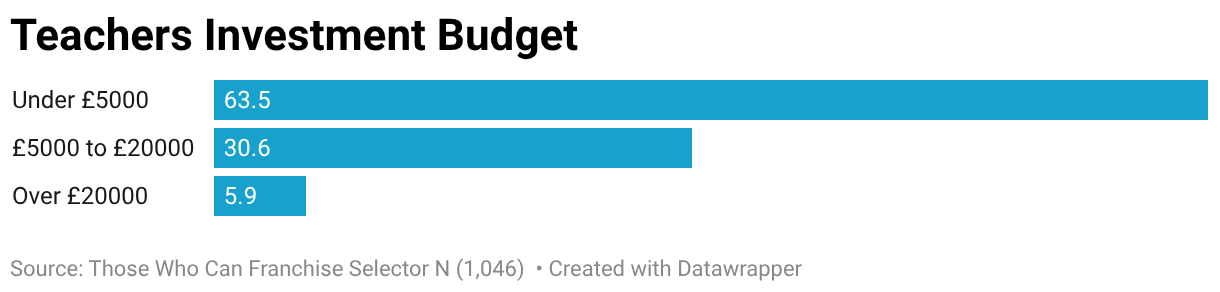
Nearly two-thirds of respondents (63.5%) have less than £5,000 available to invest in a franchise opportunity. Furthermore, 65.1% require access to funding or finance support to make franchise ownership possible.
However, there remains a substantial group willing to invest more. Almost one-third (30.6%) are prepared to invest between £5,000 and £20,000, while 5.9% are willing to invest more than £20,000.
What this means for franchise brands
Finance options, staged investment models and clear explanations of return on investment are likely to resonate strongly with teachers. Many teachers are unaware that financial support is available, therefore making this a clear part of your offer would strengthen your position. Franchise brands that can reduce perceived risk may have a competitive advantage when recruiting teacher franchisees.
Key Finding #3: Flexibility Matters More Than High Earnings
One of the clearest themes emerging from the data is the importance of flexibility.
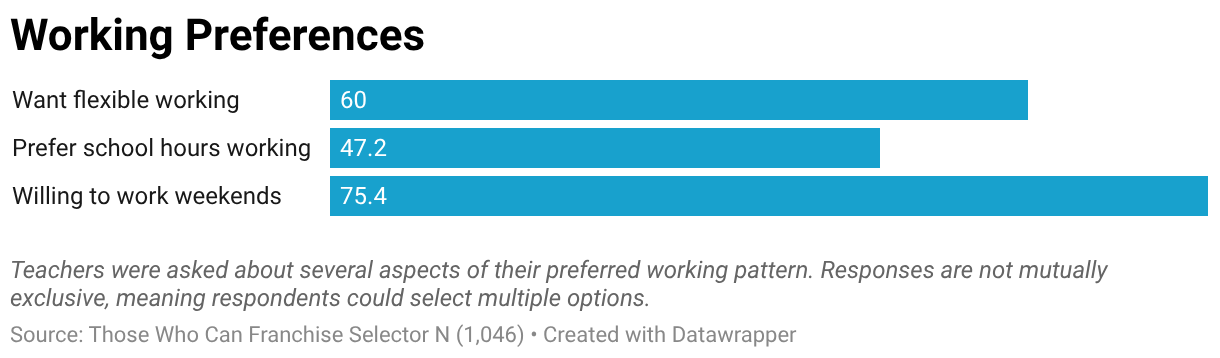
More than 60% of respondents are seeking flexible working arrangements, while 47.2% would ideally like to work within school hours. This suggests that many teachers are attracted to the autonomy and control that business ownership can offer.
At the same time, the data challenges the assumption that teachers are unwilling to work outside traditional school schedules. More than three-quarters (75.4%) are willing to work weekends if required, demonstrating a realistic understanding of the demands of entrepreneurship.
Income expectations reinforce this finding. Teachers seeking salaries between £20,000 and £35,000 are significantly more likely to prioritise flexible working than higher earners.
What this means for franchise brands
Franchise recruitment campaigns should focus on flexibility, autonomy and work-life balance rather than solely promoting income potential. The ability to control working patterns is often a stronger motivator than higher earnings.
Key Finding #4: Teachers Want Income Replacement, Not Income Maximisation
Most teachers exploring franchising are seeking an income that broadly matches their existing earning potential.
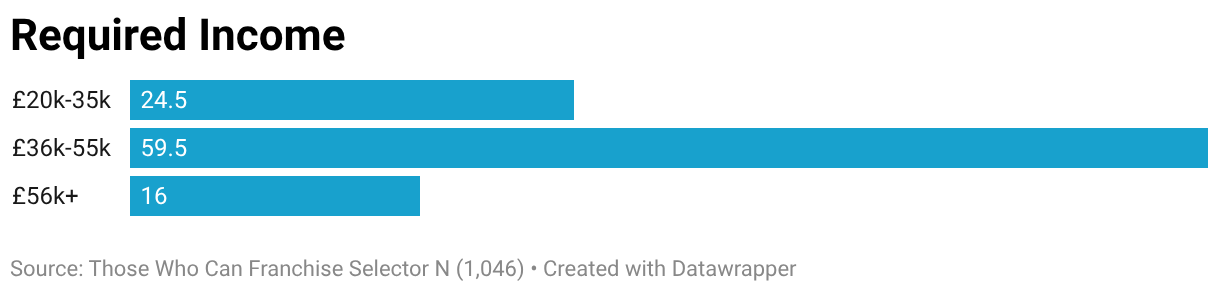
Almost three-quarters (74.2%) require annual earnings of £36,000 or more, while 59.5% are targeting incomes between £36,000 and £55,000. This suggests that many respondents are seeking a realistic replacement for their teaching salary rather than pursuing aggressive wealth-building opportunities.
At the lower end of the scale, 24.5% would be satisfied with earnings between £20,000 and £35,000. Notably, 80% of this group prioritise flexible working arrangements.
The data suggests that teachers exploring franchise ownership are generally more motivated by income replacement than income maximisation.
What this means for franchise brands
Demonstrating how a franchise can provide stable, sustainable earnings is likely to be more persuasive than promoting exceptional or aspirational income claims.
Four Types of Teacher Entrepreneur
The Lifestyle Teacher Entrepreneur
A significant proportion of teachers exploring franchising appear to be motivated by flexibility and work-life balance rather than maximising income. These individuals are often willing to accept a lower income target, with respondents seeking annual earnings of £20,000–£35,000 being far more likely to favour flexible working arrangements. Many are attracted to businesses that can operate around family commitments, school hours or term-time schedules. For this group, franchising represents an opportunity to gain greater control over their time while remaining engaged in meaningful work.
The Career-Replacement Business Builder
Alongside those seeking flexibility is a substantial group of teachers using franchising as a route into a completely new career. These individuals are typically looking to replace or exceed their teaching income and are more willing to work full-time, year-round and outside traditional school hours. They are less interested in school-based delivery and more open to serving adult customers or operating in sectors beyond education. For them, franchising is a long-term business opportunity rather than a side venture.
The Cautious First-Time Investor
Regardless of their preferred lifestyle or income goals, many respondents share a common characteristic: they are approaching business ownership cautiously. Nearly two-thirds require access to funding and almost two-thirds have less than £5,000 available to invest. This suggests that for many teachers, franchising is their first experience of entrepreneurship and represents a significant personal and financial decision. Affordability, trust, training and ongoing support are therefore highly influential factors.
The Growth-Focused Investor
A smaller but important segment demonstrates a more ambitious approach to business ownership. These respondents have higher income expectations, greater willingness to work full-time and stronger appetite for long-term growth. While they represent a minority of the audience, they may be particularly attractive to franchise brands with scalable models and multi-unit opportunities.
What this means for franchise brands
Teachers are not a homogeneous audience. Successful recruitment campaigns should be tailored to different motivations, interests and career aspirations.
What Franchise Brands Should Take Away
The findings from our first 1000 respondents reveal a profession actively exploring new opportunities. Teachers are seeking flexibility, autonomy and sustainable income, but they are also cautious about financial risk and investment.
For franchise brands, three themes stand out:
- Teachers value flexibility and control over their working lives.
- Teachers need accessible entry points and supportive funding options.
- Teachers are attracted to businesses with strong systems, training and ongoing support.
Franchise brands that can clearly demonstrate these benefits will be well positioned to attract one of the UK’s most skilled and motivated professional audiences.
About the Teacher Franchise Index
Methodology
- 1,046 completed franchise selector responses producing 17,748 data points
- Data collected during the first half of 2026
- Responses gathered through the Those Who Can Franchise Selector
- Analysis based on franchise preferences, investment budgets, customer preferences, income expectations and working pattern preferences
Our data will be updated to track changing attitudes and behaviours among teachers exploring franchise ownership.
Why This Matters
Teachers represent one of the UK’s largest pools of skilled professionals seeking alternative careers. Understanding what motivates them provides valuable insight for franchise brands, recruitment organisations and business developers seeking to attract talent from the education sector.
Partner With Those Who Can
If you are a franchise brand looking to attract teachers as franchisees, we’d love to discuss advertising, sponsorship, webinars and research partnerships.
Contact us at info@thosewhocan.org. info@thosewhocan.org